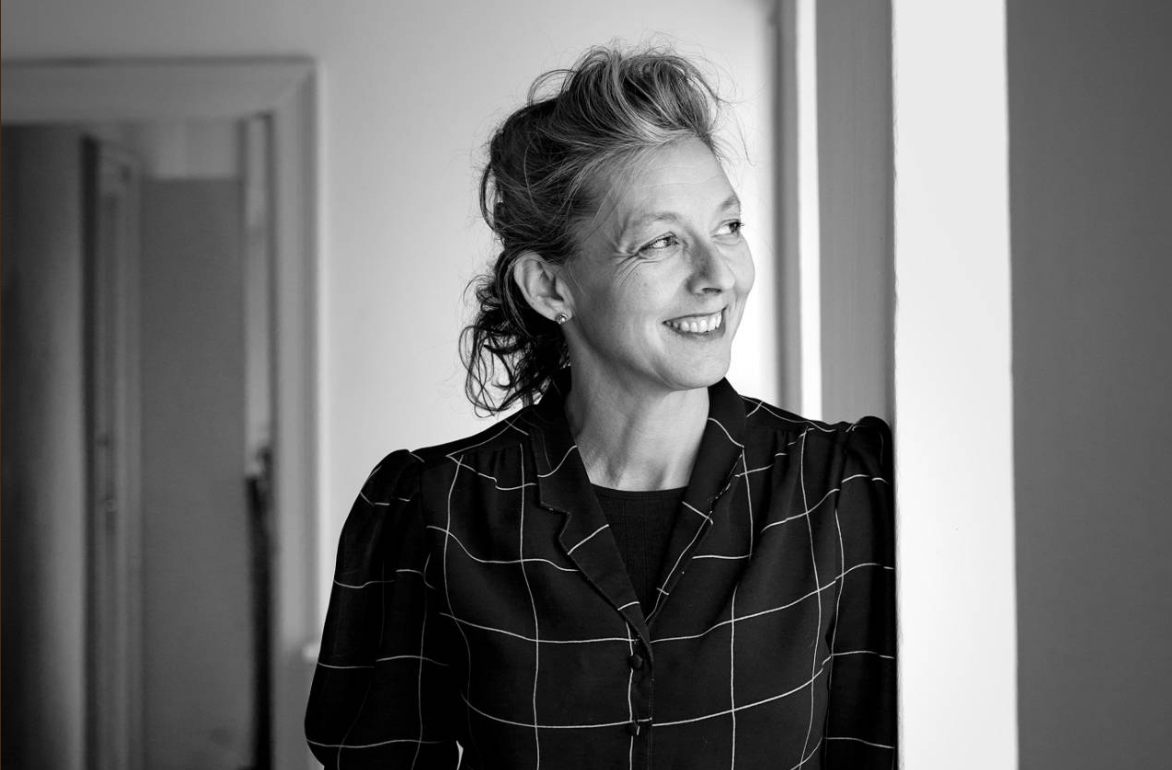
Ellen Hyllemose. Photo by Frida Gregersen
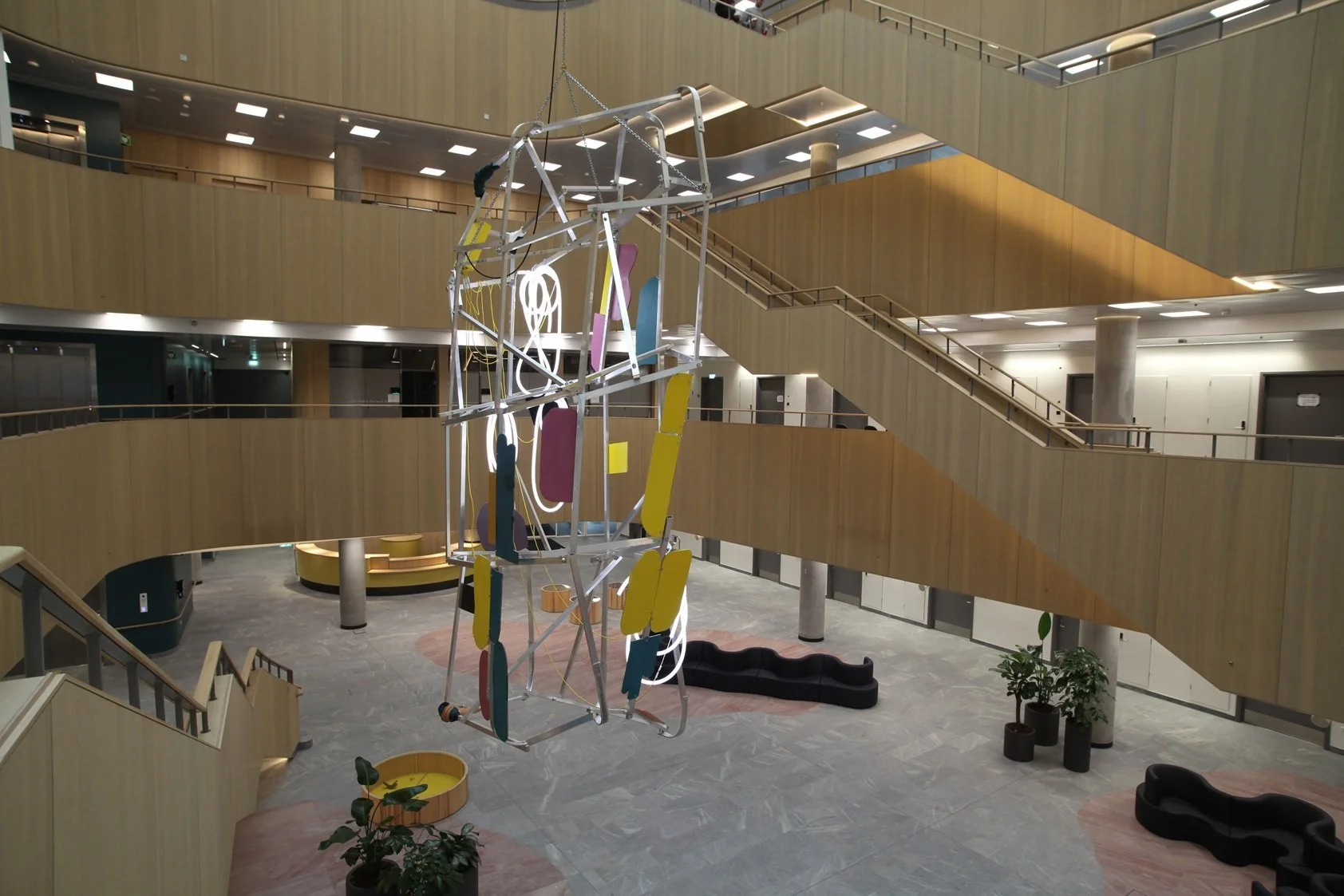
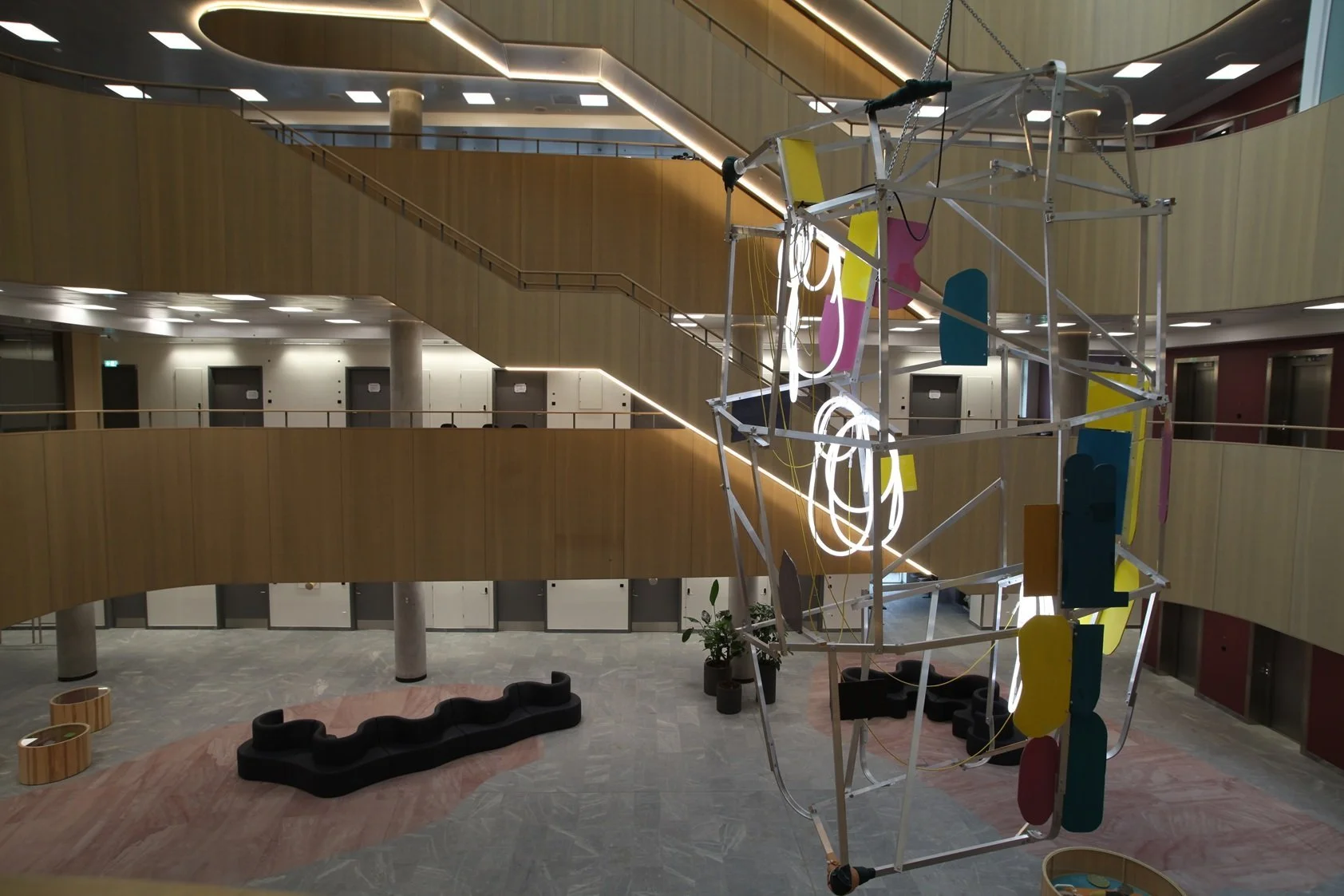
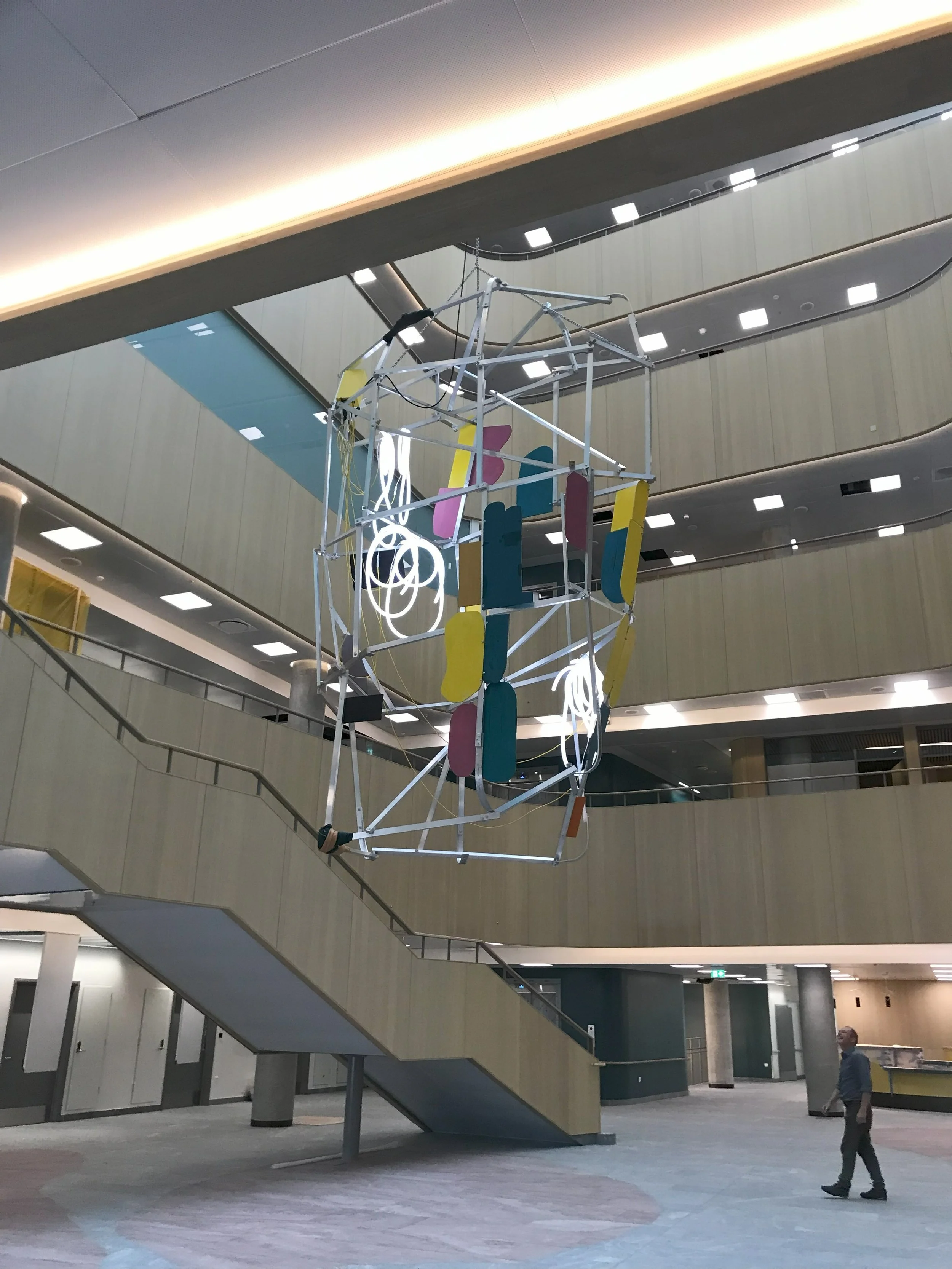
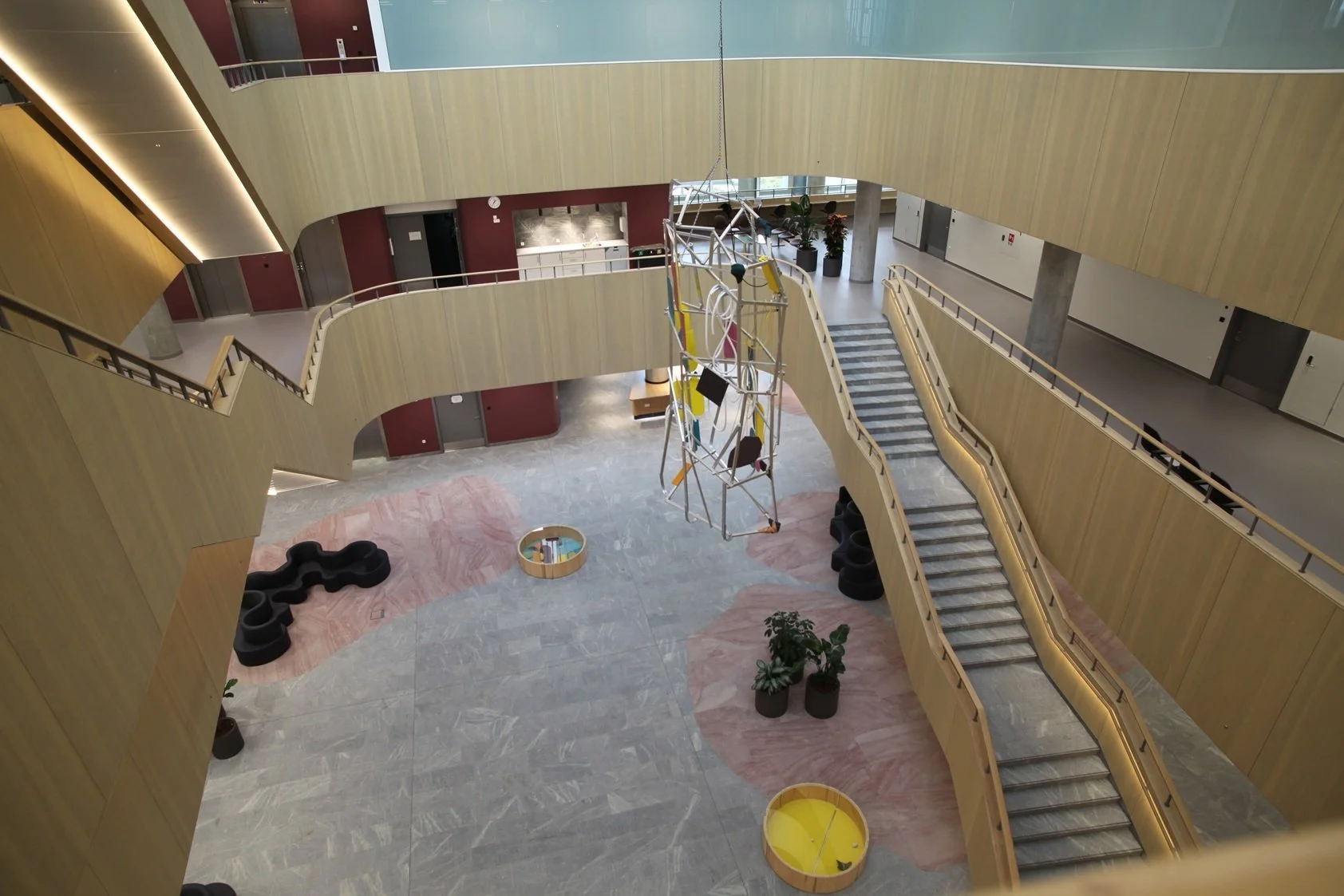
Hanging figurine, The Heart of the House, 2025
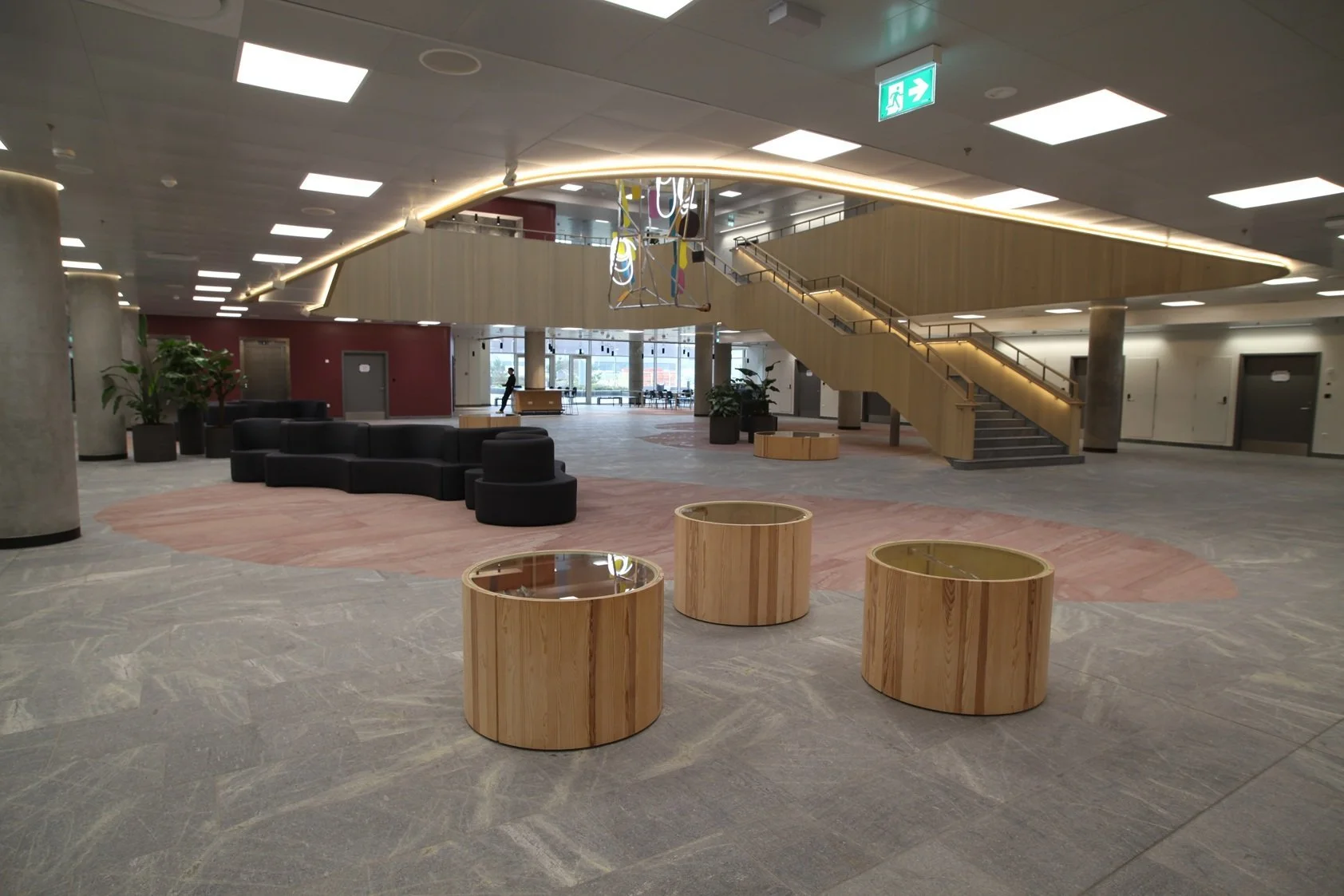
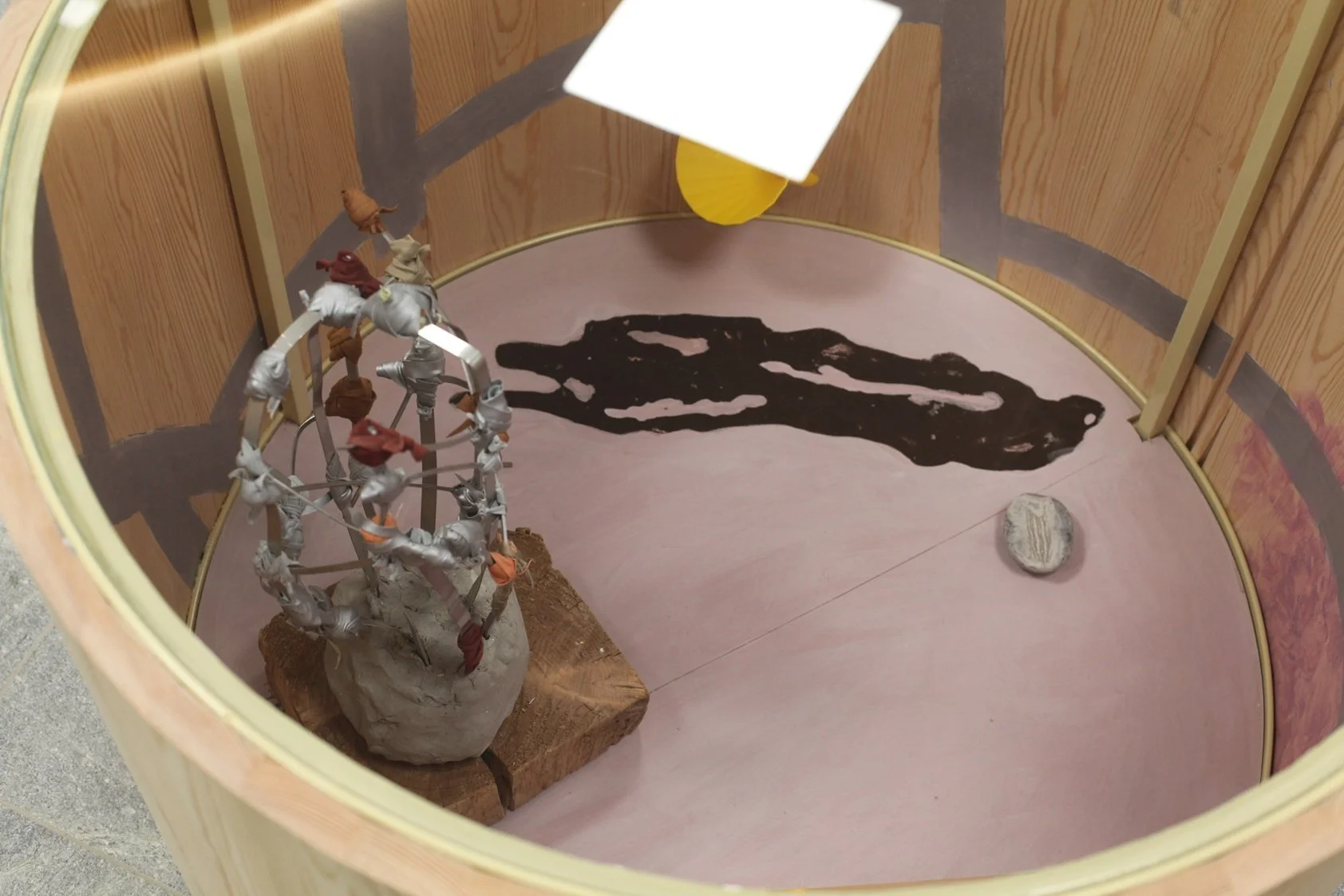
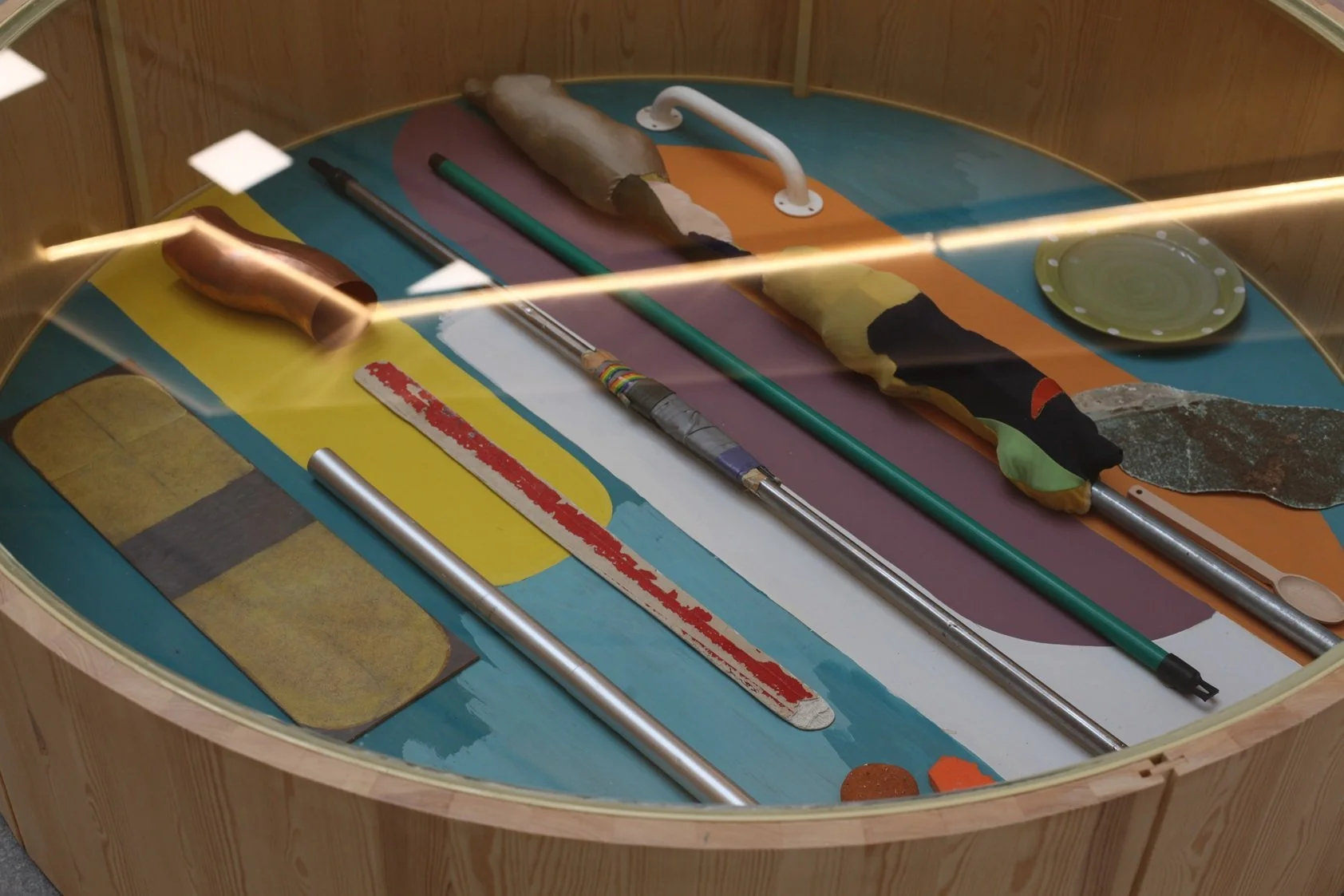
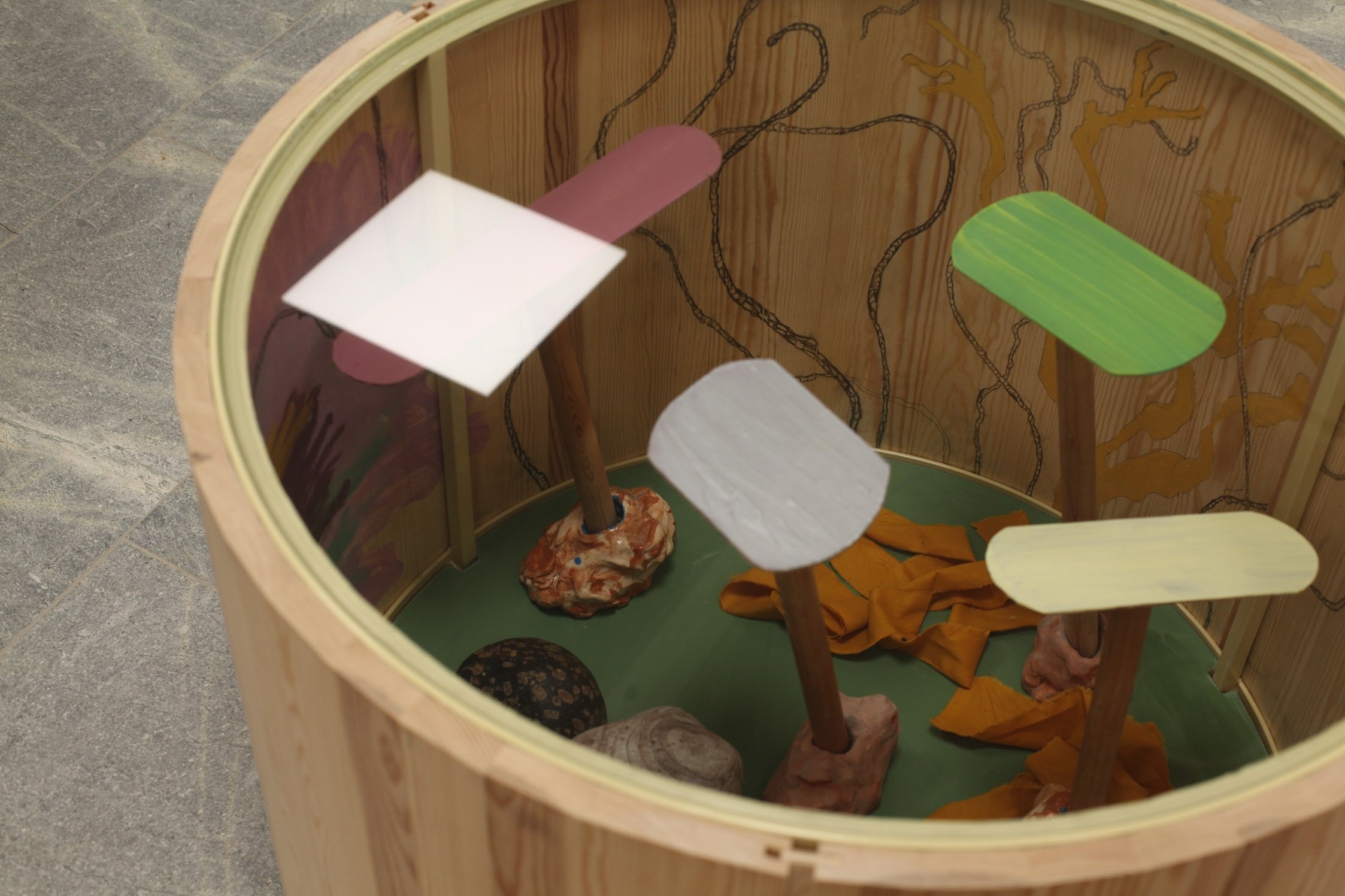
"The display cases are full of everyday things that are often invisible to us or that we don't give much thought to.”
The display cases are built around colours and forms that echo the hanging sculpture, the artworks, and the tables throughout the café and entrance areas. They are intended to create a dialogue with the suspended piece, reflecting the processes found in the body's langerhans’ islands.
“I go on walks on the beach to find inspiration and let my mind wander. I get more ideas when I’m moving or simply when I’m doing something else […] I’ve collected stones all my life; shapes, fossils, patterns, and I’ve also found things on the beach that don’t belong there: items that have fallen off ships, been thrown into the water, or ended up there in other ways."
In the display cases visitors can discover, among other things, these objects; things washed up on the beach, recycled materials and objects derived from nature.
from Ellen Hyllemose’s website
"The [hospital] has a great importance for those who will use the place. So I wanted to add something that has a different character than you would expect in a hospital. Since I can't put artworks on the floor or on the wall like in a gallery, I have to find another way to get something different into the house in other materials. That's why I made the sculpture display cases, which allow me to have something "different" that patients and others can look at while they wait. Pictures can hang anywhere since they are framed, but I wanted you to see art when you entered the house.
The process is very much like an exhibition at first, but then develops more and more into a collaboration in a specific context, where the art can almost disappear in practical solutions and economics. It's about holding on to what you wanted, but also sometimes being able to change it so that the conflict or problem is resolved."
Ellen Hyllemose, May 2026
The sculpture display cases
Ellen Hyllemose explains that her process began with freely exploring ideas in response to both the space and its surroundings before gradually focusing on the specific context. Often, she works from little more than the architect's drawings and visualisations.
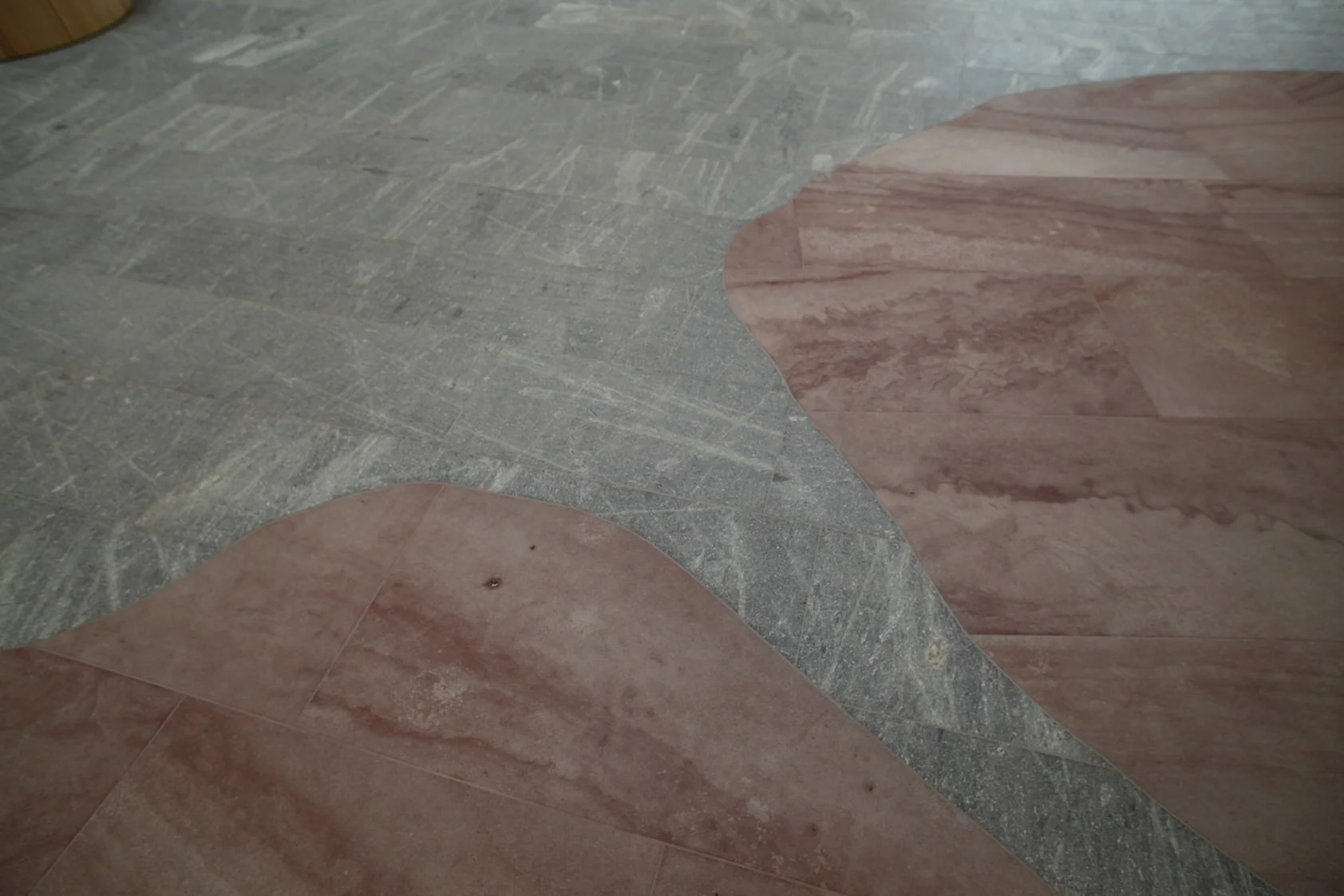
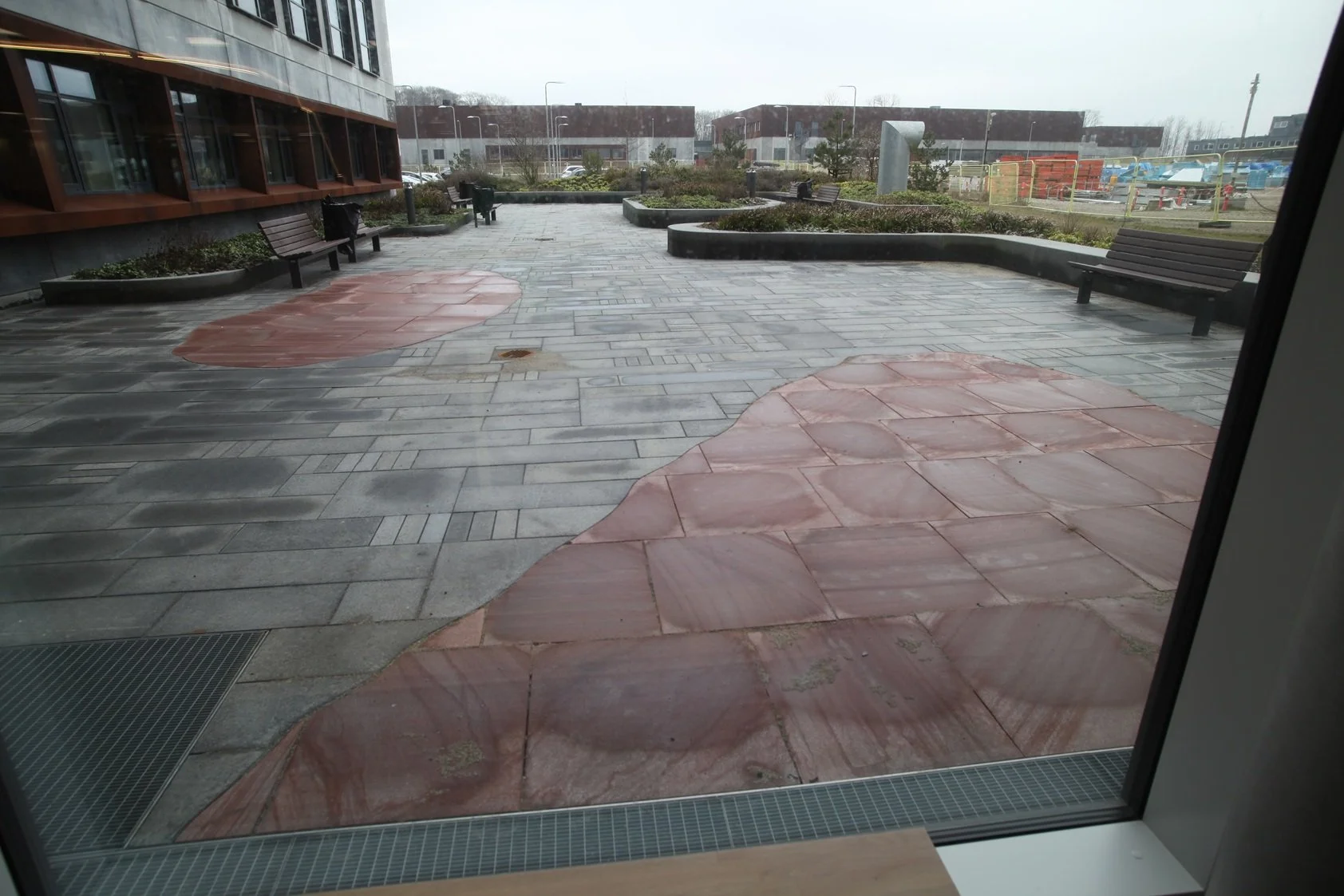
“The floor was the first thing I thought of, as it had a large empty surface in a slightly low-ceilinged room and with an opening to the atrium, where you could look down on the surface […] There was also a desire to work with the outdoors as well and I could do that with the covering.”
Ellen Hyllemose, May 2026
The idea in the floor and walls is that the areas outside and inside come together. When you enter the area with the stone fields, you are on the islands and you know you are in the Diabetes Center. The fields create peace and intimacy where you sit in the atrium, as a function of rugs in the home and here as the islands, where the relevant outpatient diabetes functions take place.
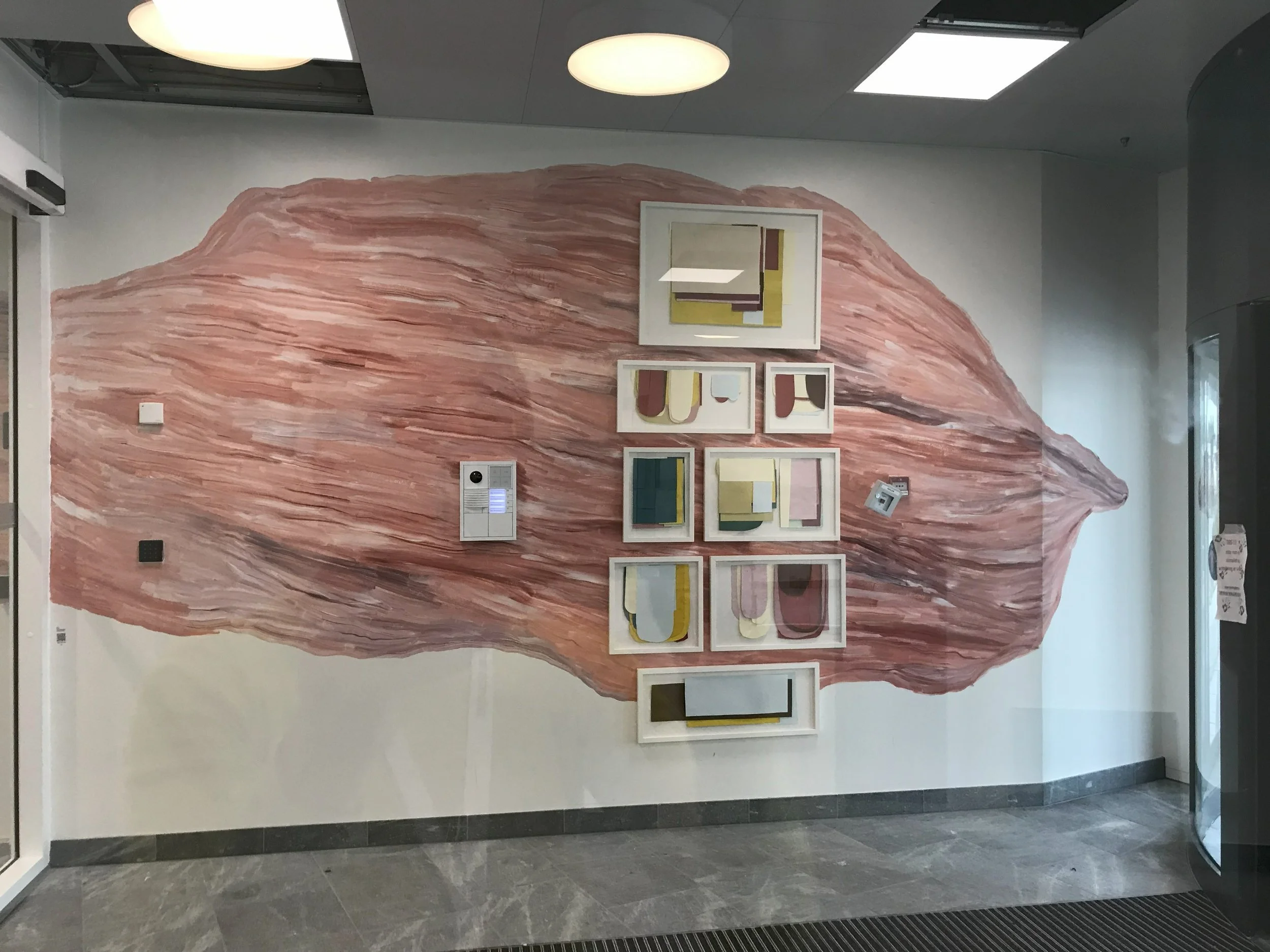
With individual painted fields on walls, where there are no floor fields, the connection and the change between horizontal and vertical, inside and outside, are marked and make you notice the fields. The fields are hand-painted in a lively way, so that they relate to the stone in the floor surface.
Another thing Ellen Hyllemose wanted, was to make something everyone could see, not just those on the ground floor, but something that could be seen in the atrium space over several floors.
The work as a whole represents a landscape-oriented and poetic interplay between added functions and materials, forms and meanings. The building acts as a body, a biological entity defined by circadian rhythms and sensory experience, governed by physical activity and the intake of nourishment, much like our own bodies.
Whether one is a patient or simply an ordinary person, circadian rhythms and the experience of the senses and the unexpected are vital to well-being. This is embodied in the The Heart of the House hanging figure with its LED lighting marking the building's rhythm.
The Heart of the House is a form that encompasses many forms within itself: the heart of the building, a receptor, a different kind of timekeeper, and so on.
In Focus
Ellen Hyllemose
Velkommen til de langerhanske øer
(Welcome to the langerhans’ islands)
In 2019 Ellen Hyllemose won the public commission to create the artwork for the entrance of the new Diabetes Center in Odense, Denmark and in March 2026 it was finally completed. In this In Focus feature, we take a closer look at the process of creating a large-scale public artwork. We spoke with Ellen Hyllemose about what this process can look like, from applying for the commission to developing and realizing the final work, and how creating a commissioned artwork for a building differs from producing artworks for exhibitions